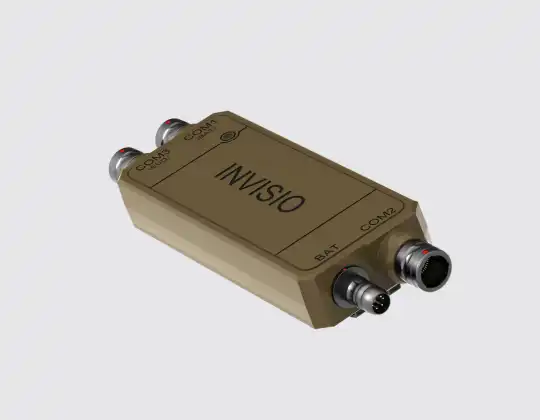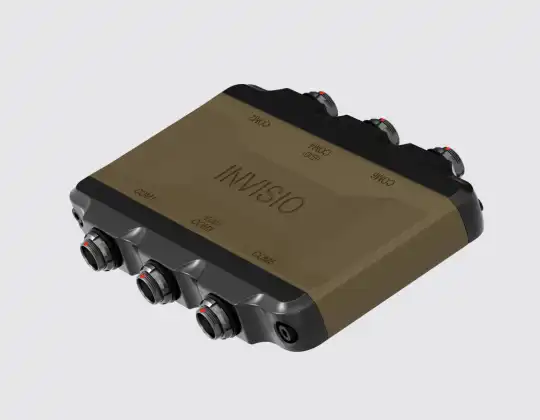




When comparing tactical hubs, understanding the difference between passive and smart hubs is critical. While both connect devices, they serve fundamentally different roles in how power, data, and system behavior are managed in the field.
Not all tactical hubs do the same job. The difference between passive and smart hubs matters when missions depend on more than physical connectivity.
Simply put, a passive hub connects devices, while a smart tactical hub manages the system.
Passive hub vs. smart hub
A passive hub connects radios, EUDs, and power physically. It passes power and data through the system but does not process, route, prioritize, or control how they are used.
In practice, devices are connected but not coordinated. Data flows through the setup without prioritization, and changes depend on manual actions by the operator or comms team.
A smart hub manages the system dynamically. It routes and prioritizes data, distributes power based on mission needs, and provides a user interface for configuration and control.
In practice, devices are coordinated as one system. Data is routed and prioritized based on operational needs, and the setup is managed centrally through a user interface.
Why the difference matters
Passive and smart hubs solve different problems. A passive hub enables connectivity, while a smart hub enables system coordination.
When missions require control of power, data, adaptability, and system behavior, connectivity alone is not enough.
One H‑Series. Two modes. No trade-off
The INVISIO H‑Series can operate as both a passive and a smart hub. There is no need to choose between different types - both capabilities are built into the same system.
In the field, the H‑Series can operate as a simple connectivity layer when only basic integration is required, or as a full system control layer managing power, data, and device coordination.
Teams can start with a simple setup and scale to advanced configurations without changing hardware. The same system supports different mission needs over time.
Configuration, control, and system behavior are managed through a web-based interface.
This allows teams to set up, adjust, and adapt the system as mission requirements change.